The 5 best Oomnitza alternative tools for IT teams in 2026
Searching for an Oomnitza alternative? Explore our 2026 list of the top 5 ITAM tools that offer better simplicity, integration, and value.

Colin Reed
IT Expert and Content Writer
Last Updated
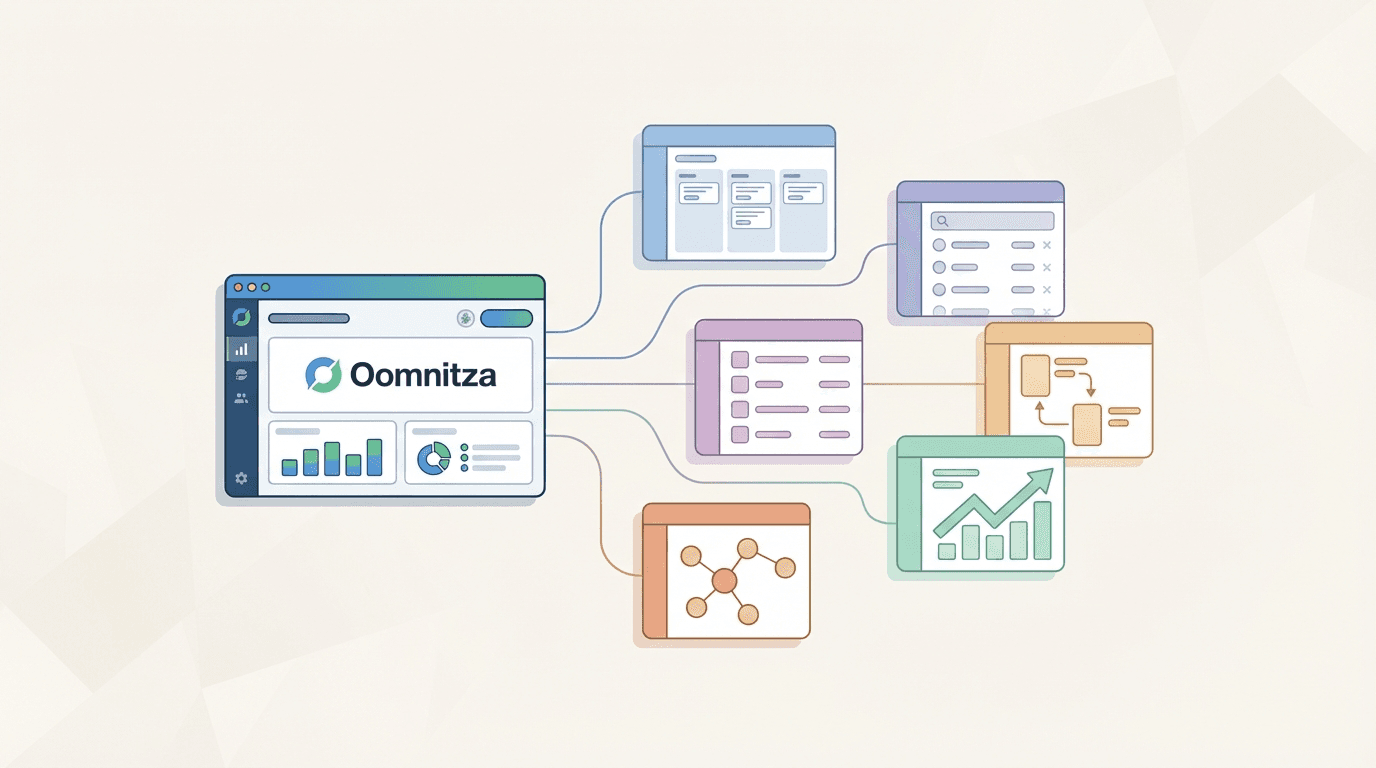
Oomnitza is a well-known platform in IT Asset Management (ITAM), offering extensive low-code automation and a wide range of integrations. However, this level of functionality may not be necessary for every team.
Some teams seek an Oomnitza alternative due to factors like potentially lengthy implementation timelines. The platform's pricing is generally geared toward large enterprises, and integration with specific tools like Jira, where support teams operate, can be a consideration.
This list reviews five solid alternatives. Each one has its own strength, whether that's native Jira integration, simplicity as a standalone tool, or a different pricing structure.
What is an Oomnitza alternative?
An Oomnitza alternative is an ITAM tool that performs the main job of tracking your hardware, software, licenses, and other tech assets. It helps you follow equipment through its entire lifecycle, from purchase to retirement.
These alternatives typically aim to offer different advantages in specific areas. This might mean they are easier to use, quicker to set up, more transparent with their pricing, or integrate more deeply with the platforms your team relies on daily.
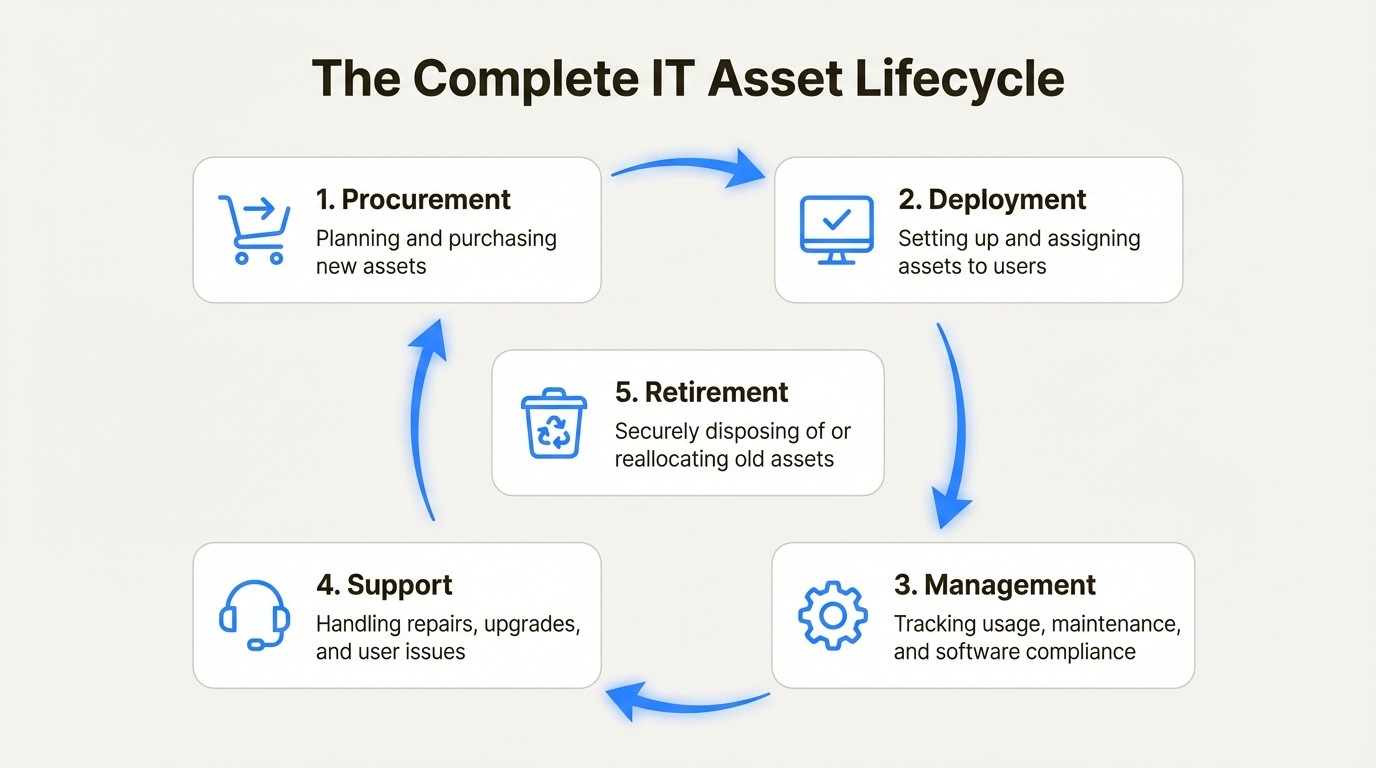
The goal is the same: a single, reliable source for all your asset information. The difference often lies in the approach, with some alternatives designed for faster implementation. A helpful way to visualize this is by looking at the complete IT asset lifecycle, as shown in the graphic below.
Criteria for selecting the best Oomnitza alternative tools
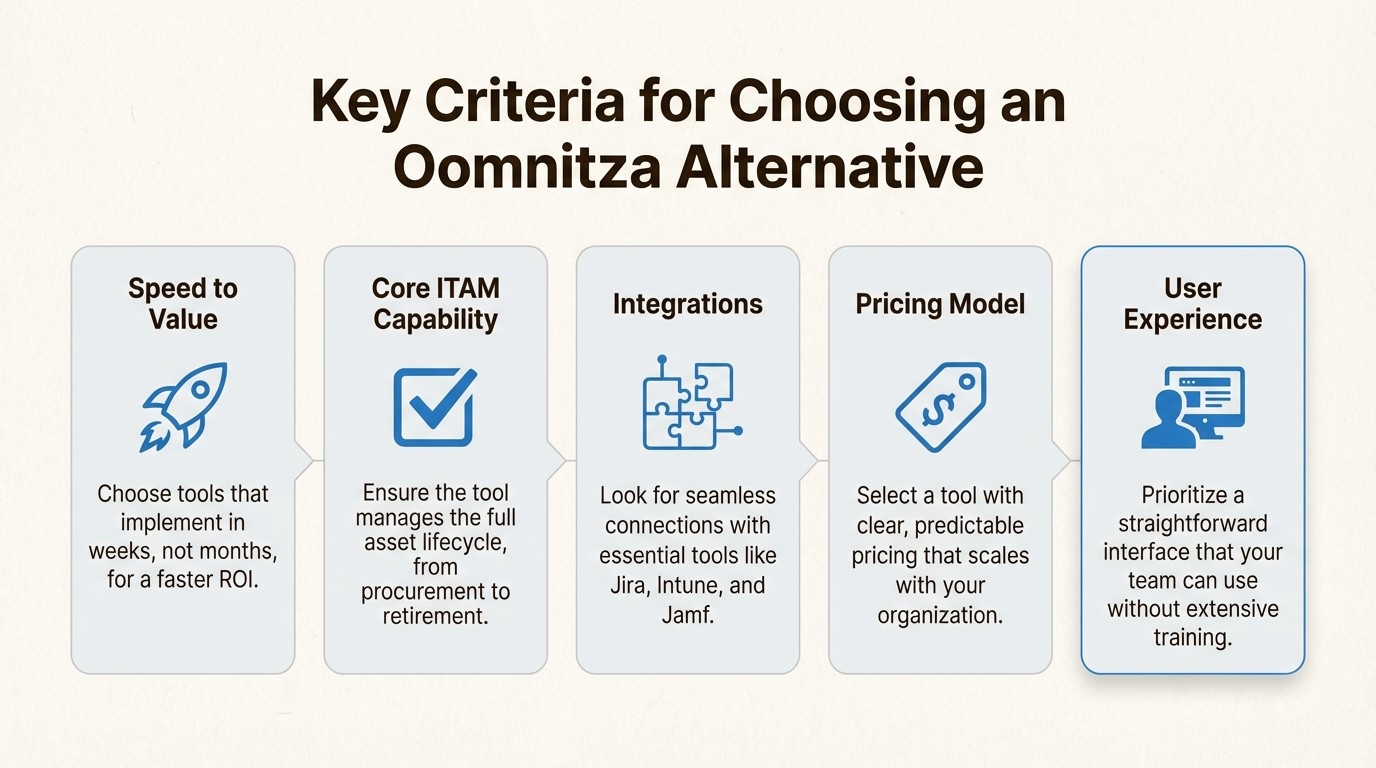
To make this list, I focused on a few key areas for IT teams, rather than just finding tools with the longest feature lists.
The first criterion was the speed to value. I looked for tools that can be implemented in weeks rather than months, allowing for a quicker return on investment.
Next was core ITAM capability. Every tool here had to be solid at managing the full asset lifecycle. That covers everything from procurement and inventory management to reporting and license compliance.
Integrations were also a significant factor. I checked how well each platform connects with essential tools, especially service desks like Jira and device management solutions like Intune and Jamf.
I also looked at the pricing model. The cost needed to be clear and predictable, so you know how it will scale as your organization grows.
Finally, the user experience had to be straightforward. A good ITAM tool should be easy enough for asset managers and support agents to use without needing a full-time administrator.
Oomnitza alternative comparison
Here’s a quick comparison of how the top five tools stack up.
Tool | Best For | Pricing Model | Key Integrations | Native Jira Experience |
|---|---|---|---|---|
Asset Management for Jira | Teams managing assets natively inside Jira | Per User | Yes | |
Teqtivity | Lean IT teams needing a fast, standalone solution | Per User | No (Connector) | |
Freshservice | Organizations wanting an all-in-one ITSM and ITAM suite | Per Agent | Wide range of business apps | No |
Asset Panda | Companies needing highly customizable tracking for any asset type | Per User (with asset tiers) | No (Connector) | |
Snipe-IT | Budget-conscious teams with technical resources for self-hosting | Free (self-hosted) / Tiered (hosted) | No (Third-party app) |
The 5 best Oomnitza alternative tools in 2026
Let's get into the details of each tool and what makes it a worthy contender.
1. Asset Management for Jira
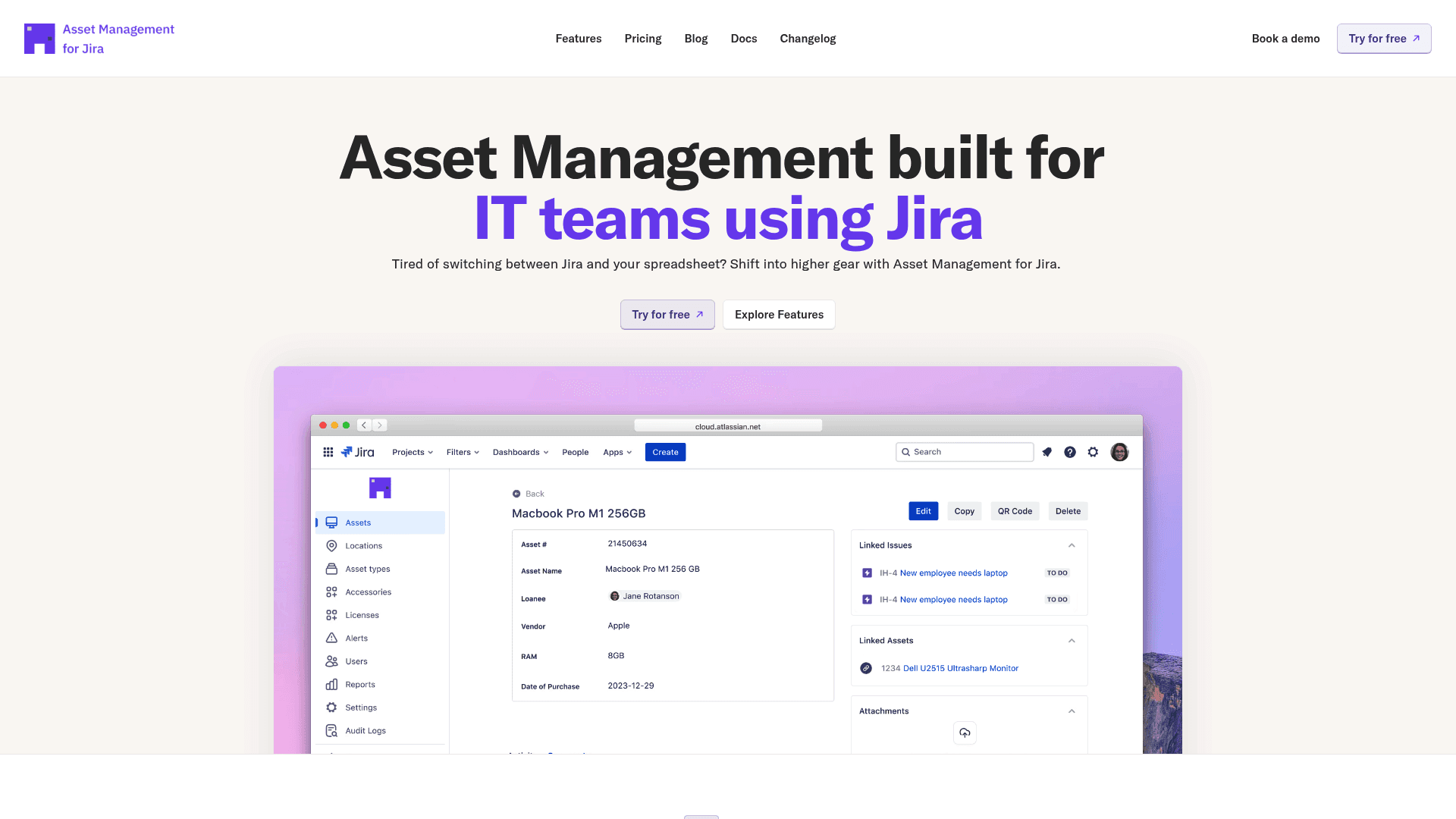
Asset Management for Jira works differently from other tools. Instead of being a separate platform, it’s a native app that puts all your asset data right inside Jira. This means no more switching between tools. Your support agents get instant access to a device's full history directly from the ticket they're working on. It's used by over 500 companies because it makes Jira the central hub for both support issues and the assets they involve.
It's on this list because it addresses the integration challenges some teams face with larger platforms. For any team in the Atlassian ecosystem, it allows for a fast setup by using the Jira interface your team already knows. As one IT Director at Drips noted, its lightweight feel and customization options let you get started in no time.
A key advantage is its native Jira experience. You can link assets to any issue, use them in JQL queries for detailed reports, and even display asset info in the customer portal. It also syncs automatically with MDM tools like Intune, Jamf, and Kandji, keeping your data accurate without manual entry. The primary consideration is its dependency on Jira. If your company doesn't use Jira for its service desk, this isn't the tool for you.
Pricing
Standard Edition: Starts at $10/month for up to 10 users, then scales per user. This plan includes unlimited asset tracking, MDM integrations, and issue linking.
Advanced Edition: Adds Role-Based Access Control, API access, and backup and restore features on top of the Standard plan for more control.
2. Teqtivity
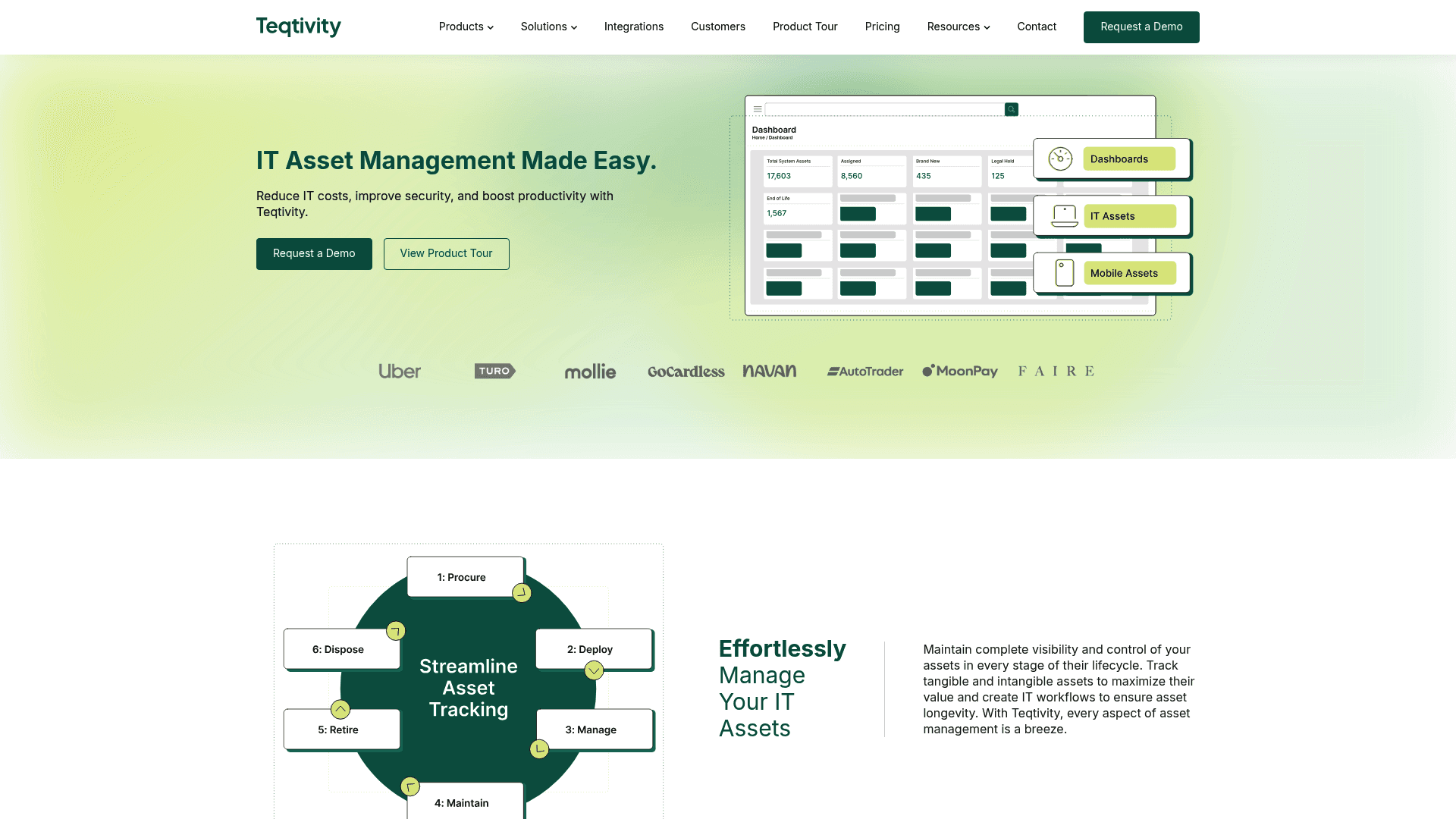
Teqtivity is a modern, standalone ITAM platform focused on simplicity and speed. It has a clean interface for managing the entire asset lifecycle and is built for lean IT teams who need a capable tool without a long setup process. Its automation of onboarding and offboarding workflows helps cut down on manual work.
Teqtivity is included as an option for teams seeking a less complex ITAM solution. It provides all the core ITAM features you need in a more approachable package. Customers often talk about its quick setup, with most getting fully operational in just 4-6 weeks.
Its clear, user-based pricing is a benefit, since it includes unlimited assets and integrations. Users also note its intuitive interface and the development team's responsiveness to custom requests. A key consideration is that while it connects to service desks like Jira, it functions as a separate system. This requires agents to work across two platforms, which is a different workflow compared to a native solution.
Pricing
Tools for Growth (1-5 Users): Starts at $79 per user per month and includes unlimited assets and integrations.
Growth+ (5+ Users): This tier has custom pricing and comes with a dedicated customer success manager and options for custom API development.
3. Freshservice
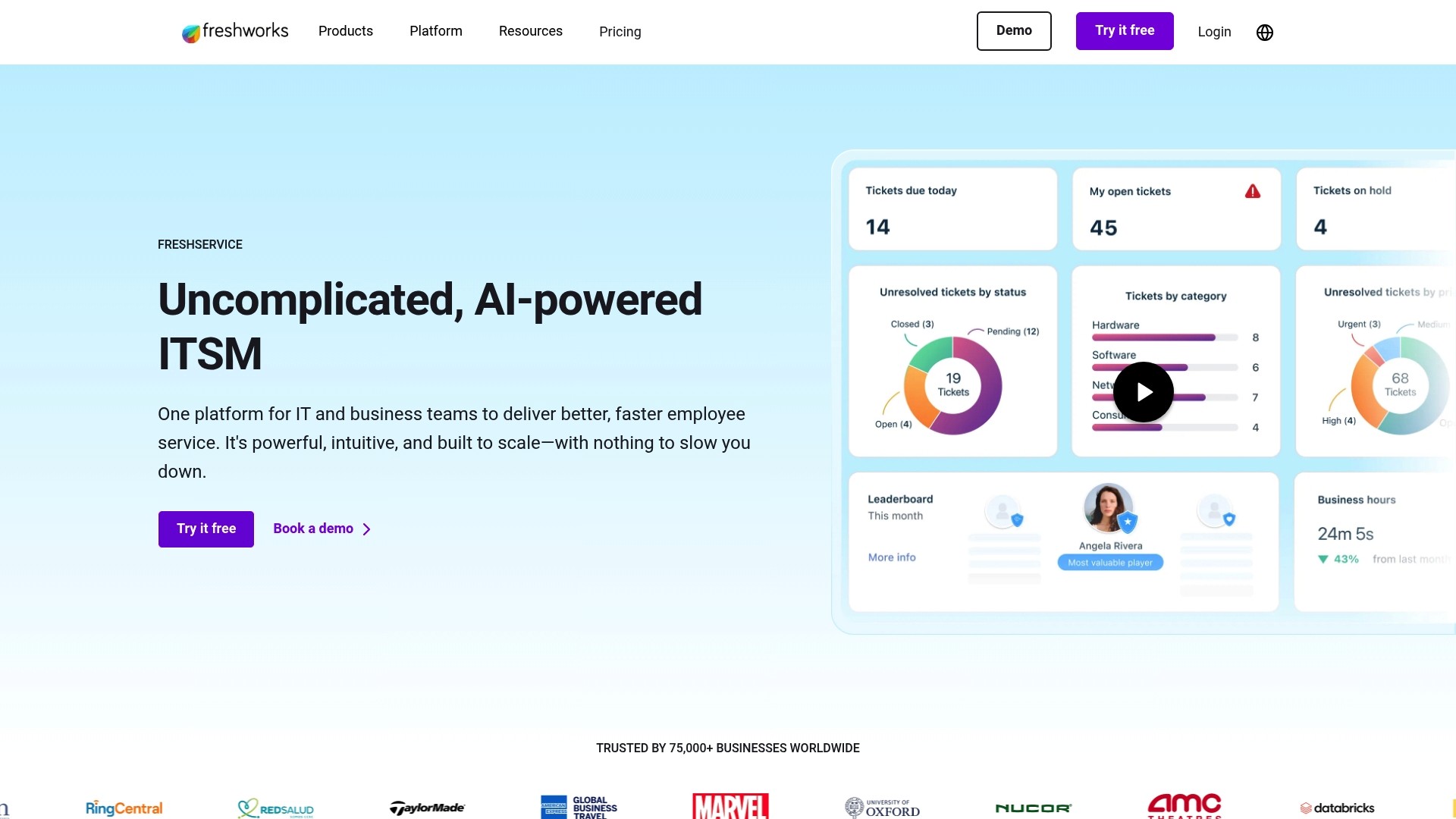
Freshservice is a complete IT Service Management (ITSM) platform that includes a solid ITAM module. It's designed for organizations that want a single solution for everything from ticketing and incident management to a CMDB and asset tracking. It also includes an AI assistant called Freddy AI to help with task automation.
This tool is suitable for businesses looking to adopt a new ITSM suite. Its asset management capabilities are woven deeply into the rest of its service desk, which creates a very connected environment for IT operations.
The main benefit is that it's an all-in-one platform that's generally considered more user-friendly than some legacy ITSM tools. Its automation and AI features can help reduce ticket volume and speed up resolution times. However, if you only need to add asset tracking to an existing service desk like Jira Service Management, Freshservice might offer more functionality than required. Adopting it would mean paying for a full suite of tools and undertaking a service desk migration.
Pricing
Growth: $49 per agent per month when billed annually.
Pro: $99 per agent per month when billed annually, which adds features like problem and change management.
Enterprise: Custom pricing for the complete suite, including access to Freddy AI.
4. Asset Panda
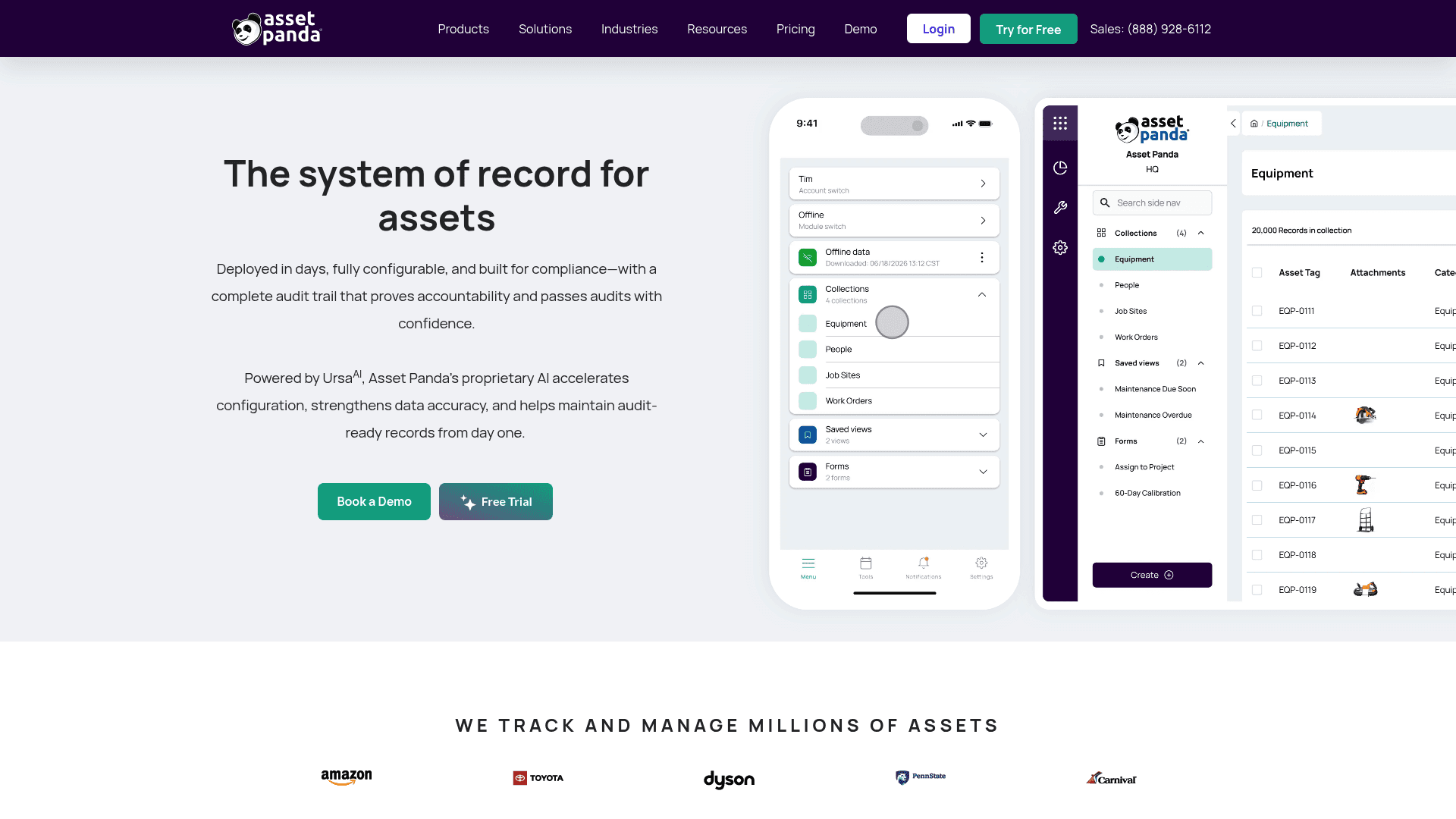
Asset Panda is a very configurable, cloud-based platform that can track almost any kind of asset, not just IT equipment. Its main strength is its no-code customization. You can define exactly how you want to track, manage, and report on your items, whether they're laptops, company cars, or service contracts.
It is included on this list for its flexibility. It’s a strong choice for organizations with unique tracking needs that don't fit neatly into a standard ITAM tool. If your team is responsible for a wide variety of assets beyond the usual IT inventory, Asset Panda is a versatile option.
The platform is incredibly adaptable, with custom fields, workflows, and reports you can shape to your specific needs. Its mobile app is also a notable feature, with built-in barcode and QR code scanning and an offline mode that's useful for audits in places with spotty internet. A consideration is that this level of customization can lead to a more involved setup process. It also acts as a separate database, so connecting it to your service desk requires manual work or a third-party connector.
Pricing
Asset Panda uses a per-user model with tiers based on the number of assets you track. The Starter plan begins at $50 per user per month when billed annually, with a 5-user minimum that supports up to 1,000 assets.
5. Snipe-IT

Snipe-IT is a popular open-source ITAM system that covers all the basics, including detailed asset tracking, user check-in/checkout, license management, and reporting. You can either self-host it for free on your own servers or use their paid cloud-hosted service.
Snipe-IT is included as a common choice for budget-conscious organizations with the technical skills to manage their own software. It offers a solid set of ITAM features with a strong commitment to transparency and no vendor lock-in.
A major benefit is the cost, since the self-hosted version is free. It also has a large, active community and covers all the essential features you'd expect, like lifecycle tracking and auditing. The hosted version is also quite affordable and includes professional support. The primary consideration for the self-hosted option is the need for technical expertise for installation, updates, and security. And while a third-party app can connect it to Jira, it’s not a native experience and lacks deep integration.
Pricing
Self-hosted: Free, but you'll need to provide and manage your own server.
Basic Hosting: Starts at $39.99 per month for unlimited assets and users, which includes support directly from the Snipe-IT team.
How to choose the right Oomnitza alternative
Picking the right tool comes down to understanding your team's specific needs and how they work.
Consider your service desk integration
Consider where your team spends most of its time. If they primarily use a service desk like Jira for ticketing, an integrated solution like Asset Management for Jira can improve efficiency. It reduces context-switching and provides immediate access to device history, which can help resolve issues faster.
Assess your feature requirements
Comprehensive tools like Oomnitza offer powerful features, achieving 98% data accuracy for customers like Netflix. However, many teams find they only need a core set of functionalities. It's helpful to list your essential requirements and find a tool that meets those needs effectively without unnecessary complexity.
Factor in implementation time and cost
A tool that takes six months to set up isn't providing value during that time. Platforms that offer guided onboarding, like Teqtivity, or are a simple app install, like Asset Management for Jira, can start providing value almost immediately.
Consider your team's resources
If you don't have someone who can dedicate a significant amount of their time to being an ITAM administrator, you should lean toward a solution that's known for being simple and low-maintenance. Open-source tools like Snipe-IT might be free, but they come with a time cost for installation and ongoing care.
Final thoughts
Moving away from a tool like Oomnitza isn't about sacrificing capability. It's about finding the right tool that fits your team's workflow, budget, and existing tech stack.
For teams that use Jira, bringing asset data directly into the existing ticketing system can be an effective strategy. This approach can lead to better service delivery, improved data accuracy, and more control over IT costs.
If your team uses Jira, you can see how much faster you can resolve issues by starting a free trial of Asset Management for Jira.