A practical Reftab alternative guide
Searching for a Reftab alternative? Get a comprehensive playbook on solving core IT asset management issues, from cost control to faster support, and see why a native Jira solution is the answer.

Colin Reed
IT Expert and Content Writer
Last Updated
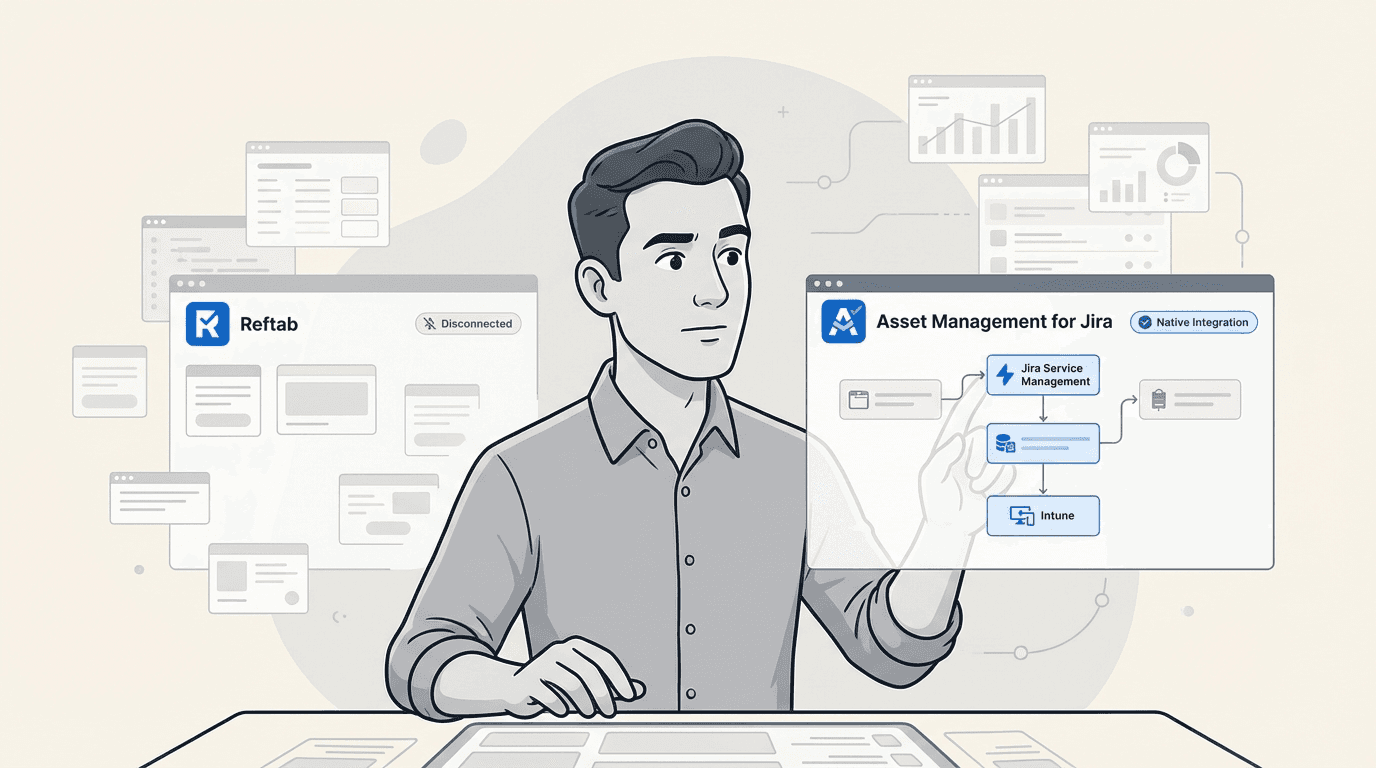
Let's be direct. Your spreadsheet is holding you back. Your current asset tool, even with its integrations, might feel like it's operating in a silo. If you're looking for a Reftab alternative, you're familiar with the challenges of context switching throughout the day.
This isn't just another feature-by-feature comparison. It's a playbook for solving the real problems that keep IT leaders up at night, from laptops vanishing into thin air to staring down a six-figure software audit. I'm going to walk you through the business outcomes you should be aiming for and show you how a truly native approach inside Jira is the straightest line to getting there.
Core problems driving the search for a Reftab alternative
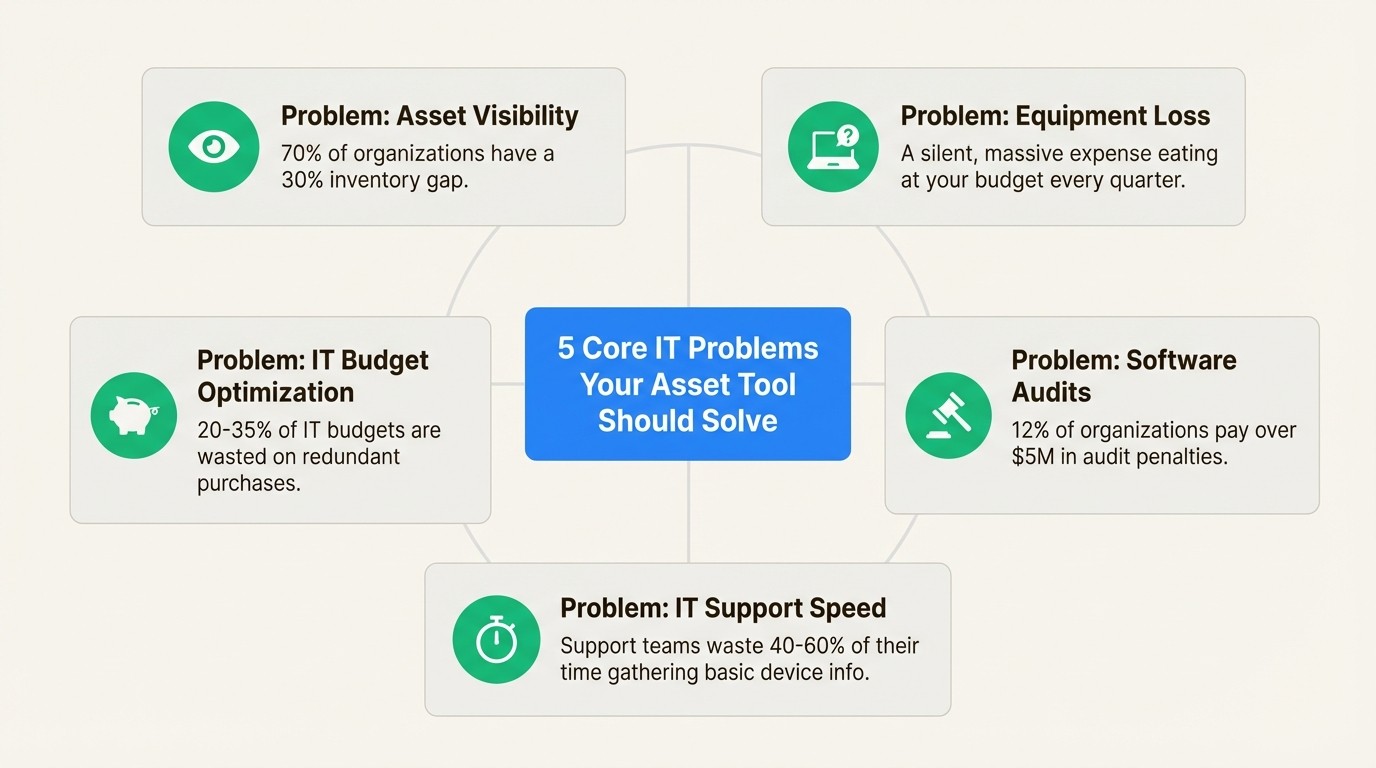
Every IT department is fighting the same battles. Gear goes missing, software licenses are a black box of risk, and support tickets drag on because nobody has the right information. These aren't just daily headaches; they're serious drains on your budget, time, and team morale. To give you a clearer picture, here are the five core issues we see driving this search, and how to fix them.
1. The challenge of asset visibility
It all starts with not knowing what you actually have. A Gartner study pointed out that 70% of organizations have a 30% gap between their planned inventory and what's really out there. When your data is in a separate system, even one with a plugin, it's never truly real-time or available where your team does its work.
A native Jira solution makes asset data a core part of the system. With Asset Management for Jira, your inventory doesn't just link to Jira, it lives in Jira. You can use asset fields in filters, queues, and automation rules. By syncing with MDM tools like Microsoft Intune, Jamf, or Kandji, your device data stays current without anyone lifting a finger.
The result? You stop wasting hours trying to make two different systems agree with each other. Your team can find any asset in seconds, right from the ticket they're working on.
2. The silent cost of equipment loss
Laptops assigned to people who've left, loaners that never came back, and shared devices that just disappear. It all adds up to a massive, quiet expense that eats away at your budget every single quarter.
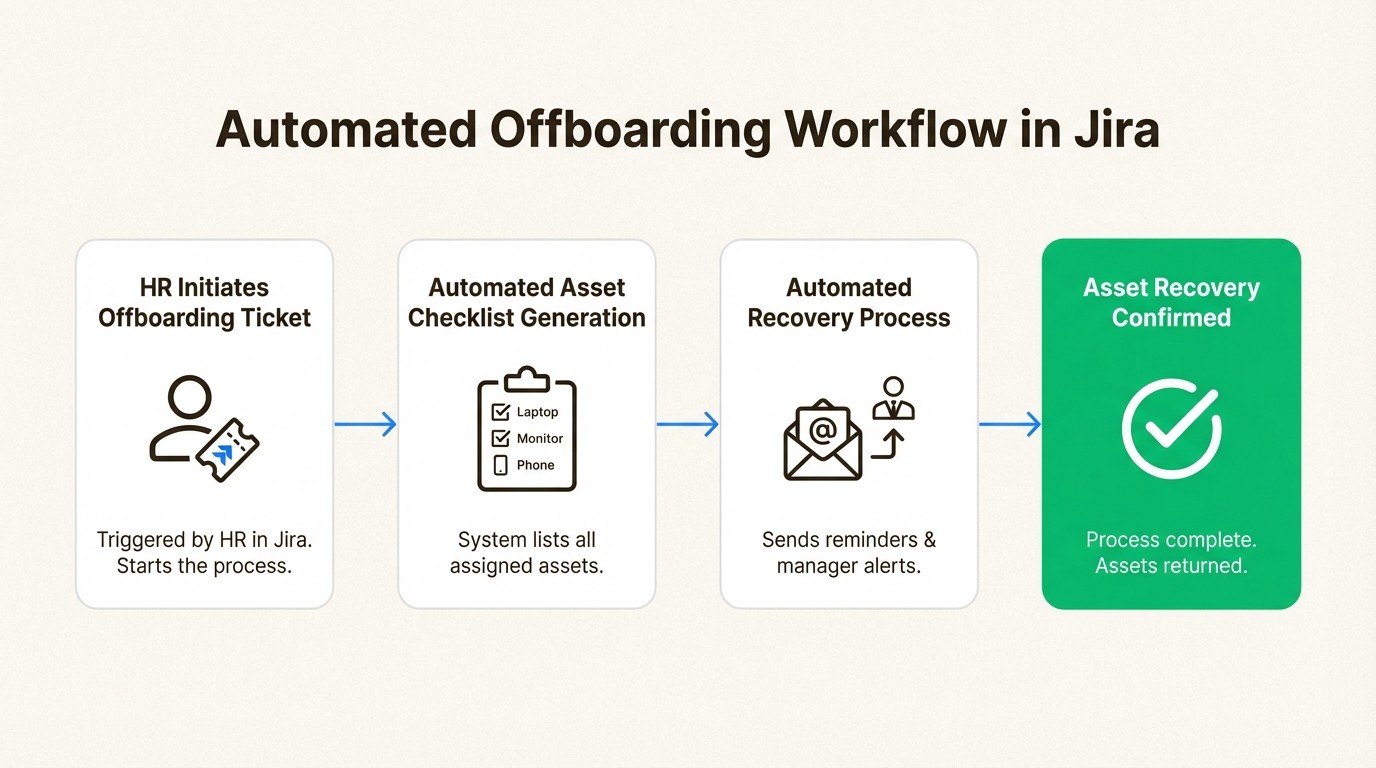
The fix is a system of accountability that's wired directly into your team's daily grind. With a tool like Asset Management for Jira, you can build automated offboarding workflows right inside Jira. When HR kicks off an offboarding ticket, it can automatically generate a checklist of all assets assigned to that user, starting a recovery process with automated reminders and escalations.
3. The risk of software audits
Getting a software audit notice from a big vendor like Microsoft can turn into a costly, disruptive fire drill. According to a Flexera report, 12% of organizations end up paying $5 million or more in software audits over three years. Without a central, audit-ready inventory, you're exposed.
The only way to win this game is through continuous compliance. You need a live view of licenses you own, where they're installed, and who's using them. When this data lives inside your service desk, like with Asset Management for Jira, running a compliance report is a simple, proactive task, not a reactive crisis. You can spot and fix gaps long before an auditor ever calls.
The outcome is turning a multi-week, high-stress event into a two-day formality, saving an average of 90% on related costs and penalties.
4. The need for IT budget optimization
Most IT budgets have a 20-35% waste factor baked right in, mostly from buying things you already own. You buy new laptops because you can't find the ones in storage. You renew software licenses for people who left the company months ago. You pay for repairs on devices that are still under warranty.
Real cost optimization happens when you make decisions with good data. When you can see your entire inventory, you can redeploy gear that's just sitting around. When you track license usage, you can cut seats and save thousands at renewal time. By centralizing asset data, companies regularly cut 20% or more from their IT spend without hurting service levels. It’s not about being cheap, it's about being smart.
5. The impact on IT support speed
Your help desk is probably wasting half its time just trying to get the basic information needed to even start solving a problem. Every ticket becomes an interrogation: "What's your serial number? What OS are you on? Is this the same laptop you had a problem with last month?"
The solution is giving your support team instant context. When a ticket is created in Jira Service Management, the agent should immediately see every asset assigned to that user, along with its configuration, warranty status, and the entire ticket history. When your asset data lives natively in your ticketing system, this becomes automatic. The result is a 35% or more reduction in ticket resolution times and a much happier support team.
Comparing approaches for a Reftab alternative
When you're evaluating a Reftab alternative, the decision often comes down to one question: do you want a tool that integrates with Jira, or one that lives inside Jira? Both can work, but they solve for different levels of operational drag.
Reftab is a standalone asset management platform with a wide feature set and integrations for many systems, including a plugin for Jira Cloud. Asset Management for Jira is a native Atlassian Marketplace app built just for teams who want to manage assets without ever leaving their Jira environment.
Here’s a practical look at the differences.
Feature | Reftab | Asset Management for Jira | The Bottom Line |
|---|---|---|---|
Integration Model | Standalone platform with a Jira plugin to link assets to tickets. The source of truth is outside Jira. | A native Jira app. Asset data is part of Jira, usable in JQL, automation, and dashboards. No context switching. | For teams working primarily in Jira, a native solution can reduce operational friction. |
Pricing Model | Priced per asset. The Business plan is $125/month for up to 250 assets, with unlimited users. | Priced per Jira user. A team of up to 10 users costs $10/month for unlimited assets. | The pricing models serve different needs. Per-asset pricing may suit large teams with few assets, while per-user pricing can be economical for teams with many assets per user. |
Core Focus | Broad asset management for various industries (construction, healthcare, education) with a wide feature set including maintenance and depreciation. | Laser-focused on IT and software teams using Jira. The features are built to solve problems within the context of Jira Service Management and Jira Software. | Reftab is a broad asset management tool with a Jira connection. AMFJ is a specialized tool for IT teams working within the Jira ecosystem. |
Setup & Configuration | You have to set up a separate Reftab account and users, then configure the API connection to Jira. | Installs directly from the Atlassian Marketplace in a few clicks. Configuration happens inside Jira's admin settings. | A native app installs from the Atlassian Marketplace, which can simplify setup for existing Jira administrators. |
Getting your IT assets under control isn't about finding the tool with the longest feature list. It's about solving a few core business problems with a simple, reliable process your team will actually follow. Stop losing gear, stop overpaying for software, and give your teams the information they need to do their jobs well.
If your team's workflow is already built around Jira, the most direct path is a native solution. It gets rid of the friction of switching between systems and puts critical asset data right where your team solves problems every day.